

AI has made prospecting harder.
Nowadays prospects are getting blasted with an absurd volume of emails, LinkedIn messages and calls from every angle.
The bar to cut through the insane increase in noise and earn a reply is higher than it was in 2020, but no one has time to write a 47-step custom script for every message.
Today we’re covering Jason Bay’s Triple T framework from Episode 577 of the podcast for crafting outbound messages prospects respect. It’s a scalable framework that works for any outbound channel with 3 simple ingredients:
- Trigger: Give Them a Reason to Pay Attention
- Tension: Name a Problem the Trigger Creates
- Trust: Prove You Can Help
Before we break down each T, let’s look at how all 3 get woven into a cold email selling an HR platform:
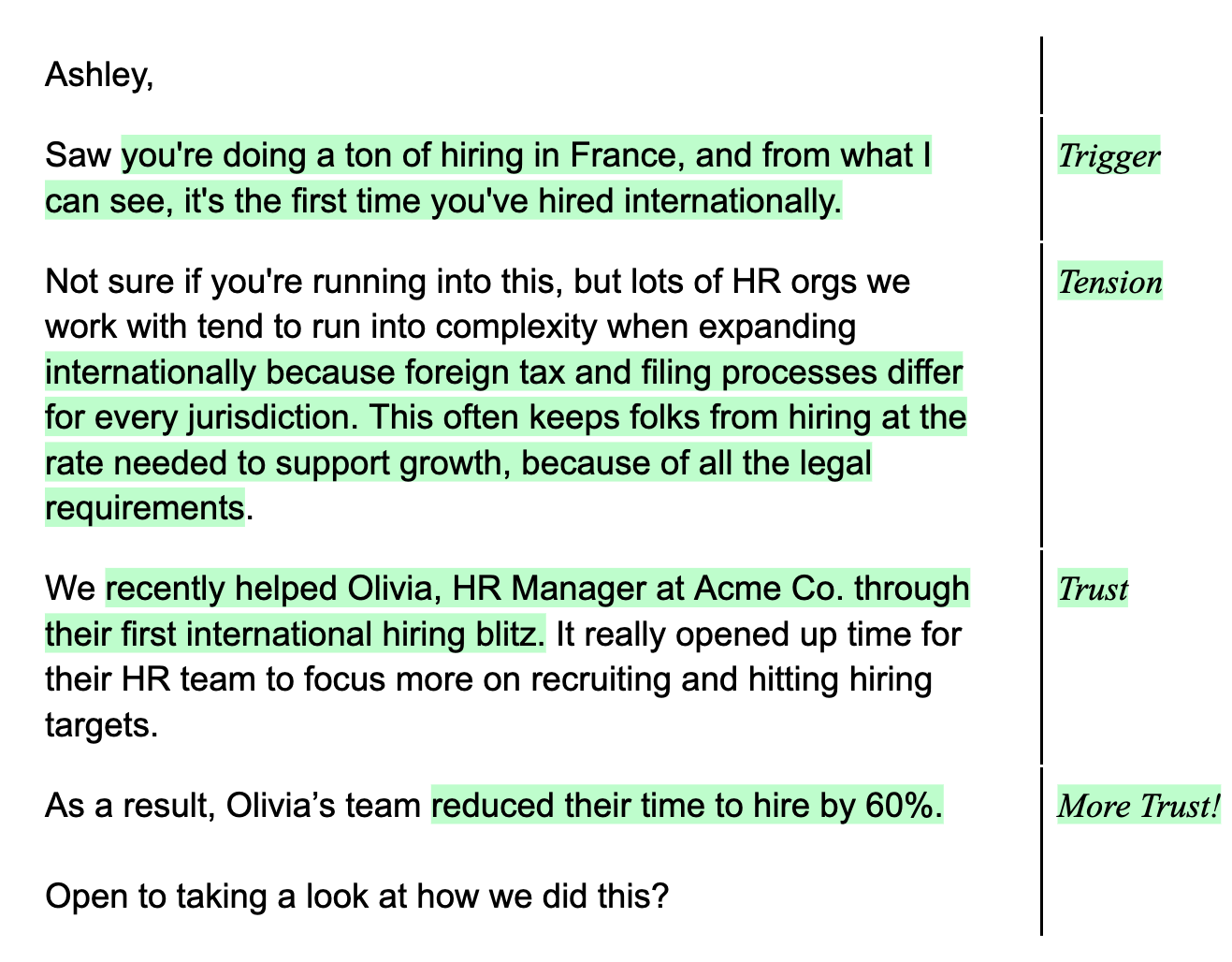
Now that we’ve T’d it up, let’s break down each of the 3 ingredients, starting with Trigger.
Trigger: Give them a Reason to Pay Attention
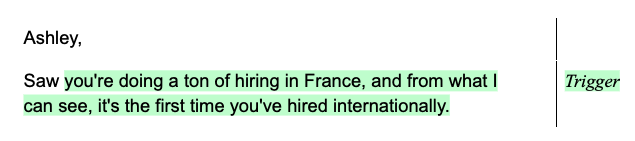
If the first line of your message doesn’t make abundantly clear that it’s meant specifically for them, you’ll be bulk-deleted with the other generic spam crowding your prospect’s inbox.
I recommend bucketing prospects into trigger groups so you can bulk draft tailored messages instead of writing them one-by-one. For example, you could send the above message to any prospect hiring in France and it would still feel tailored to them.
Your trigger should relate to the problem you solve, so reverse engineer recent deals for what made prospects want to talk in the first place. Other triggers in this example might be new industry regulations or payroll provider changes.
I recommend brainstorming a list of your 5 most common triggers, then using AI to quickly scan for them any time you’re researching a new account.
Tension: Name the Problem the Trigger Creates
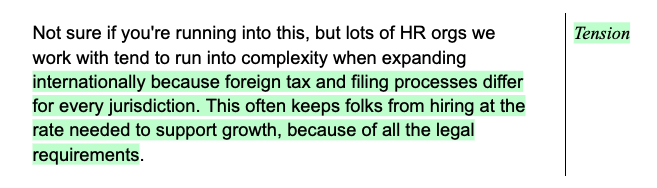
Once you've earned their attention with the trigger, you have to name the problem you think the trigger creates.
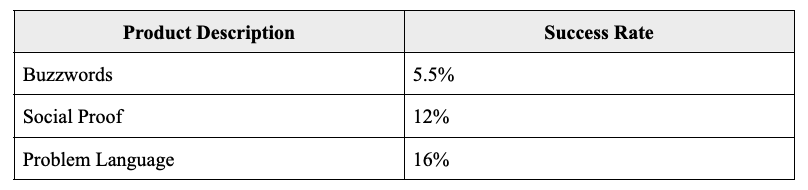
Avoid value proposition buzzwords like single source of truth, all-in-one platform, or AI-powered. These are the same generic value phrases every seller uses, which makes you blend in with every other crappy telemarketer reaching out.
In sales, you cannot be perceived to be better until you’re first perceived to be different.
Still not convinced? We studied over 300M cold calls in partnership with Gong and found problem language is 3x more effective than the buzzword language:
Trust: Prove You Can Help
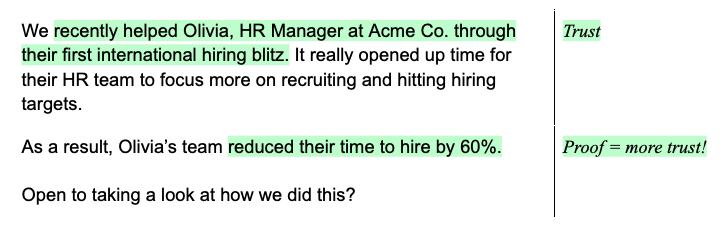
If you nail the problem, you shouldn’t need more than a sentence or two about the solution.
To build trust, use a customer story or data point (or both!) instead of hitting them with a full explanation about how your product works. When I sold to law firms, most didn’t care about the product until they heard a peer law firm was seeing results with us.
Eventually you’ll need to explain how your product works, but this is often enough to start a conversation.
That’s it!
Before you send your next outbound message, check for the Triple T:
- Is there a clear trigger?
- Have you stated relevant tension?
- Did you earn trust with proof?
Relevant messaging beats more messaging.
That’s a wrap on Triple T!