

Most reps lose the deal in the first 10 minutes of the demo.
They jump straight into a screen share and parade features without asking a single question.
Instead, top reps run demos that confirm and uncover priorities throughout, has a flow that the prospect cares about, and only show features tied to prospect’s challenges.
For today’s Noozy, we brought in Adam Ochart to break down his exact demo framework that helped him become the #1 rep and earn 8 promotions at Gong:
- Lead with a What We Learned and Demo Flow Slide
- Ask bridge questions to build your business case
- Lead with why before showing what when demoing
Let’s get into it.
Lead with a What We Learned and Demo Flow Slide

If you’re showing your product 5 minutes into the demo, you’re already playing from behind.
Buyer priorities change fast, which means what you planned to show before the call may not even be relevant anymore.
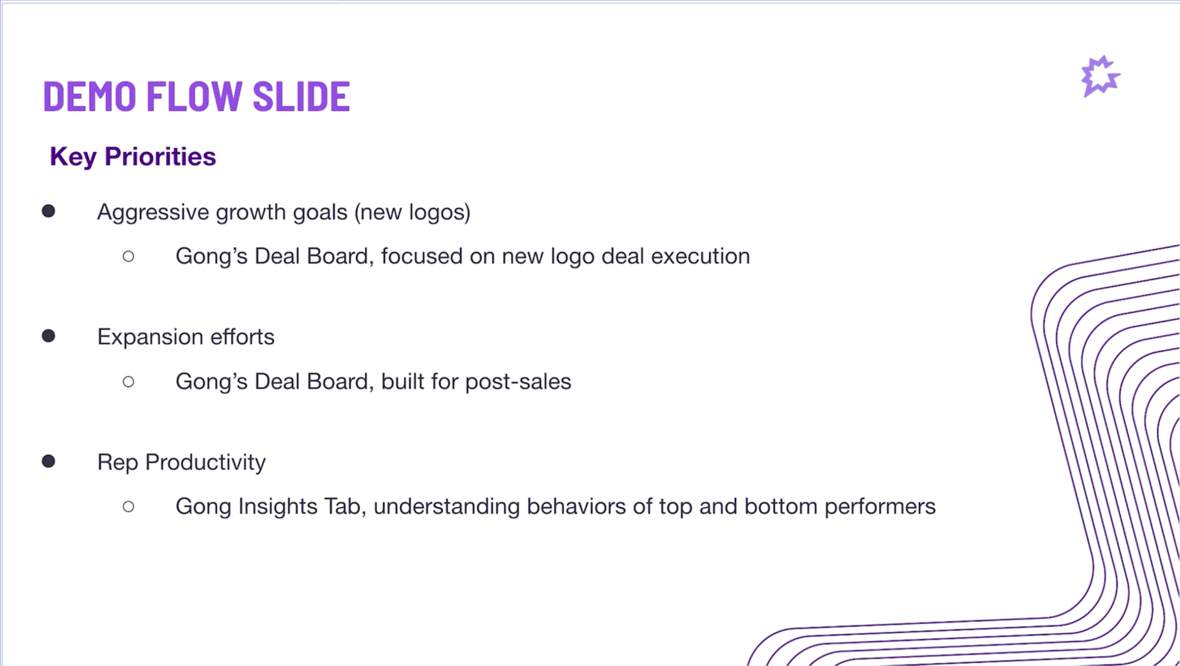
Before showing a single feature, Adam uses two slides to confirm what the buyer cares about and that the demo flow still makes sense:
1) The What I’ve Learned Slide - confirms your prospects priorities are still relevant.
Review this top to bottom to make sure you’re still focused on the priorities that matter.
2) The Demo Flow Slide - confirms you’re showing tailored product features
This is your guardrail against random feature dumping and keeps the demo relevant from start to finish.
Ask bridge questions to build your business case
Most demos are completely one-sided… the rep talks, the buyer watches.
The real problem isn’t the awkwardness that creates for the buyer.
It’s that you’re missing one of the best opportunity to surface and fix gaps in your deal.
Adam believes demos are actually the best time to run discovery, because prospects tend to open up once they see your product.
To do this, he prepares 2–3 bridge questions per feature designed to uncover critical information he may have missed in discovery.
Here’s an example if he was trying to uncover metrics:
“This is Gong’s deal board. I'm really excited to walk you through this and how it directly aligns with the problems that you've outlined. Before I do, one thing I wasn't sure of is how big of a problem is this actually at your organization?”
Now he’s no longer guessing whether this is a $100K issue or a $1M one — he’s filling a real gap in the deal during the demo, not after it’s too late in the sales cycle.

Lead with why before showing what for product features
Adam has seen hundreds of demos during his time at Gong, and there’s one mistake he sees reps make over and over.
They lead product explanations with the million and one things the product does.
That fails because buyers care far more about their own problems than your product.
Instead, Adam always tees up features by first explaining why they matter to the prospect and the challenges they’re facing.
For example, if a prospect is focused on winning upmarket and Adam is demoing Gong’s deal board, he might say:
“You talked about losing deals at market and that being the biggest focus. Most teams rely on opinion-based signals — checking CRM, calling reps, and reacting late. We built our deal board to centralize the data so you can see deal risk early, understand what’s actually forecasted to close, and act without chasing sellers.”
Leading with why turns the demo into a test drive where the buyer evaluates it through their own problems and use cases, instead of generic product language that means nothing to them.
Want Adam’s exact talk tracks for running demos that actually move deals forward?
Watch the full breakdown in our latest YouTube drop.