
Ever walk around a farmer’s market and catch yourself thinking… I could make that pistachio granola at home for half the price.
Nowadays our prospects are thinking the same thing: we could just build that software in-house.
Vibe-coding has made building software dramatically easier, which means the “build vs. buy” objection is only going to become more common.
Today we’re breaking down Jen Allen-Knuth’s 4-step process for handling build vs. buy:
- Know the Debate Better Than They Do
- Validate the Build Case + Understand Their Thinking
- Help Them Succeed at Building
- Solve the Risks Building Creates
If you want to watch Jen walk through the training live, check it out on the 30MPC YouTube channel here.
Step 1. Know the Debate Better Than They Do
It’s kinda hard to overcome the “build” objection if you can’t have an intelligible conversation about the nuances of build vs. buy in your category.
Jen recommends using your favorite LLM to help answer these 3 questions:
- What is their ownership’s stance on build vs. buy? You’ll want to understand the nuance of any ownership mandates before they come up in your deal.
- What are the pros AND cons of build vs. buy for my category? Knowing both sides helps you come across as a trusted consultant, not a biased seller.
- What are influential voices in my space saying? Citing credible voices elevates your status and is a way to subtly challenge the build approach using someone else’s opinion.
With this intel, you can actually discuss the decision like a trusted advisor instead of reactively arguing for “buy.”
Step 2. Validate the Build Case + Understand Their Thinking
Prospect: “After some internal conversations, we’ve decided to pursue building this solution internally.”
The WORST thing you could do is immediately start panic mansplaining why buying your product is way better than building.
Instead, Jen recommends agreeing that building in-house is a viable option and exploring how they’re thinking:
- “What led you down this path to build?”
- “How far along are you in the process?”
- “What are you most optimistic about re: the build case?”
- “What are you most worried about?”
These aren’t “gotcha” questions. These are meant to help you understand their current beliefs and assumptions driving their decision to build.
Often, their answers will expose flawed assumptions in their thinking you can come back to later when making the case for buying.
From here, you’re still not gonna try to convince them. Instead ask permission to share suggestions for how to succeed in their quest to build in-house.
Because only an unbiased trusted expert would help them build better.
Step 3. Help Them Succeed at Building
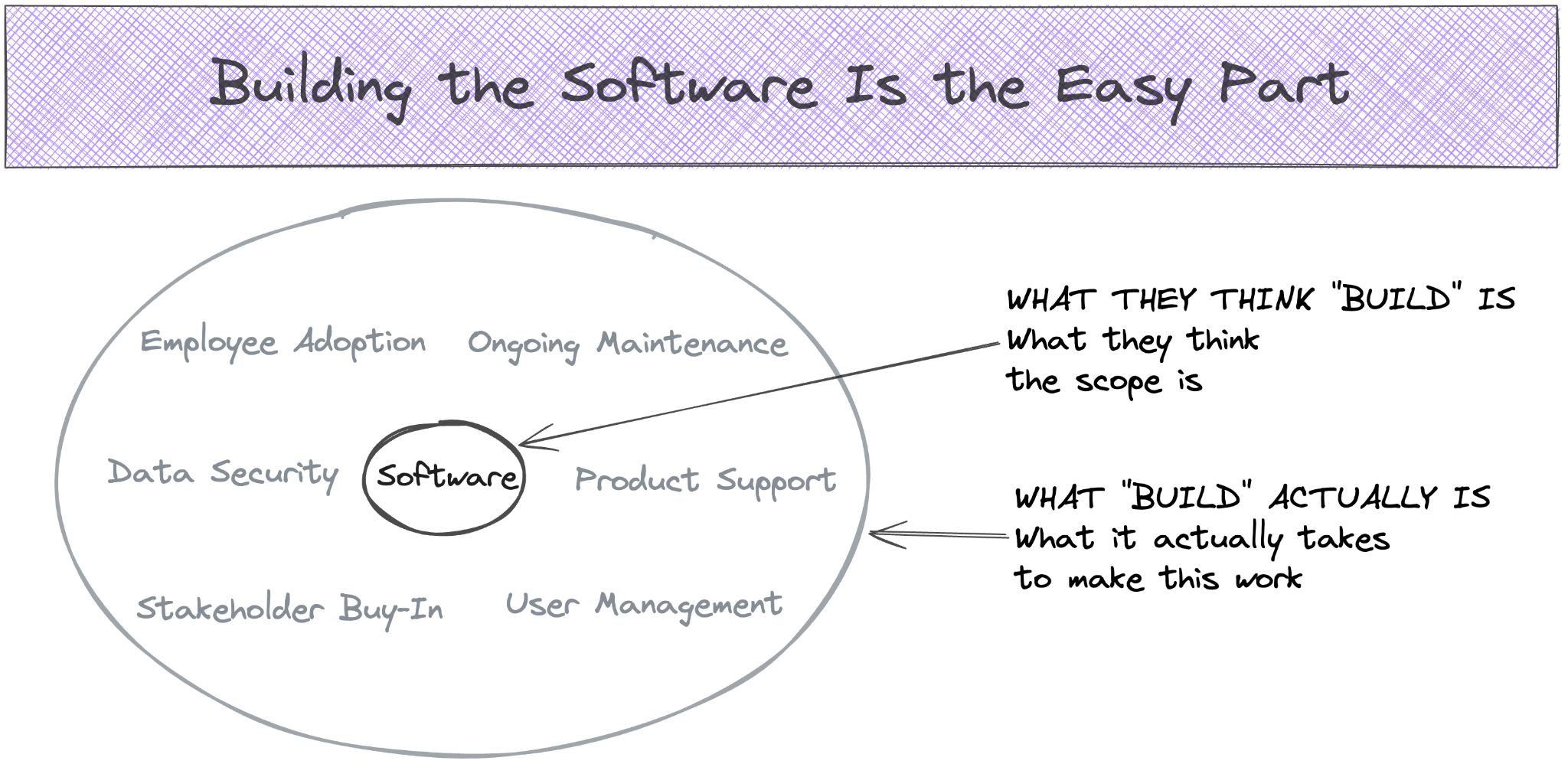
Sharing best practices that help their build succeed earns trust by showing you’re genuinely trying to help. But it also exposes how much work it actually takes beyond just the initial product build.
Here are two best practices you can share that apply to most BvB decisions:
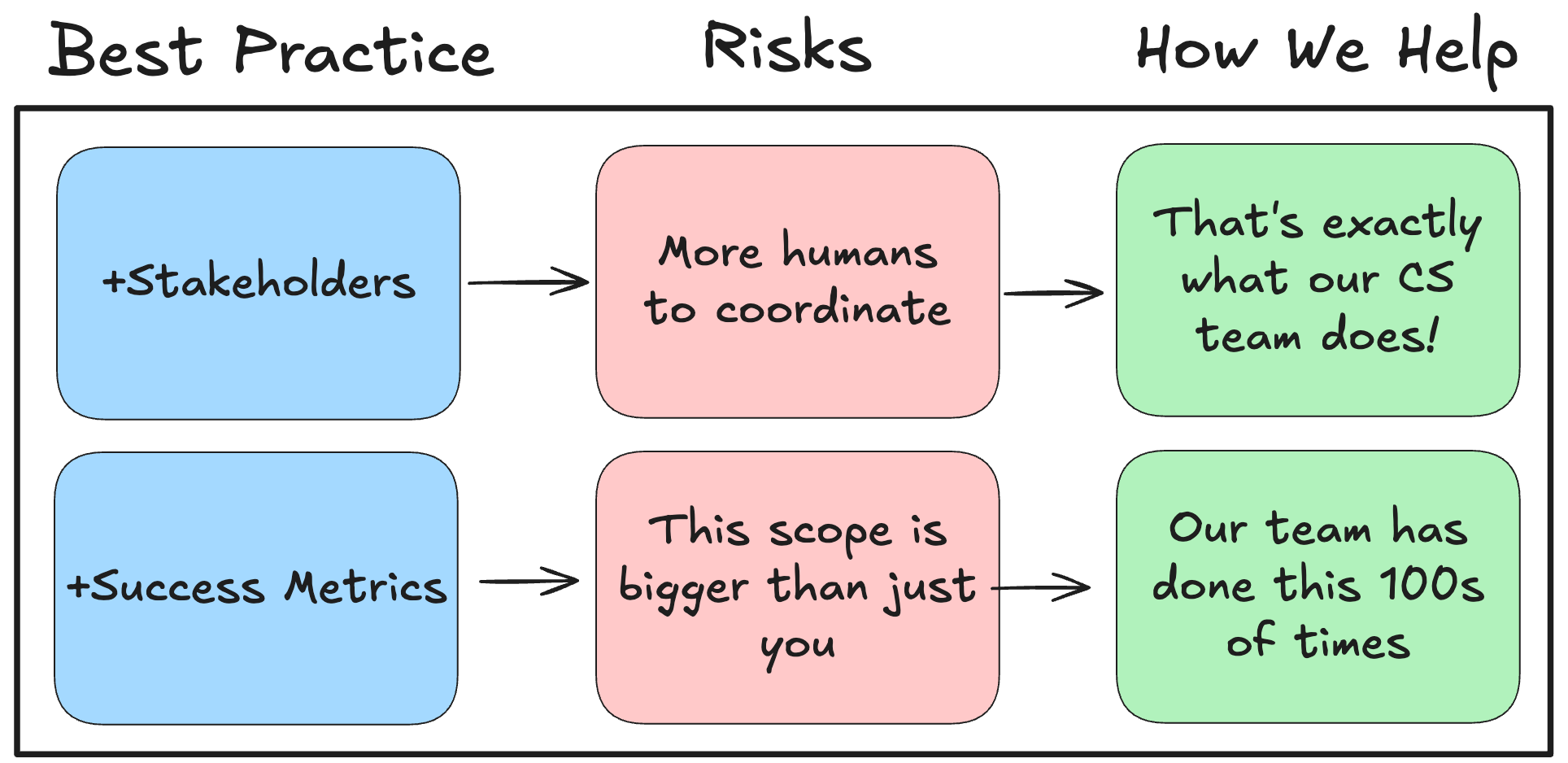
Stakeholder Recommendations: Help them identify the full scope of stakeholders who need to be involved so the organization doesn’t “organ reject” the new product.
For example, if a law firm were building its own client intake system, I’d suggest involving attorneys from every practice group to make sure the workflow works as well for litigation as it does for IP.
That helps avoid the common problem where the product functions technically, but gets rejected by the organization around it.
Success Management: Help them understand the full scope of how they’ll need to measure the success of the project.
Continuing the law firm example, the new client intake system might be celebrated for cutting intake time in half. But if seasoned partners struggle to set up billing-rate exceptions, the “faster” intake process might actually be deemed a failure by the lawyers.
Help them think beyond the initial metrics that come to mind so they make everyone at the company happy, not just their team.
Step 4. Solve the Risks Building Creates
Finally time to SELL again!
Expanding the scope of what it actually takes to make the project successful beyond just writing code opens the door to explain how you help beyond just the product.
They’re not just buying software from you. They’re buying implementation, change management, support and best practices that massively de-risk the project.
Building can work, but buying makes things infinitely easier to get right.
Save yourself the headache and just buy the damn granola!